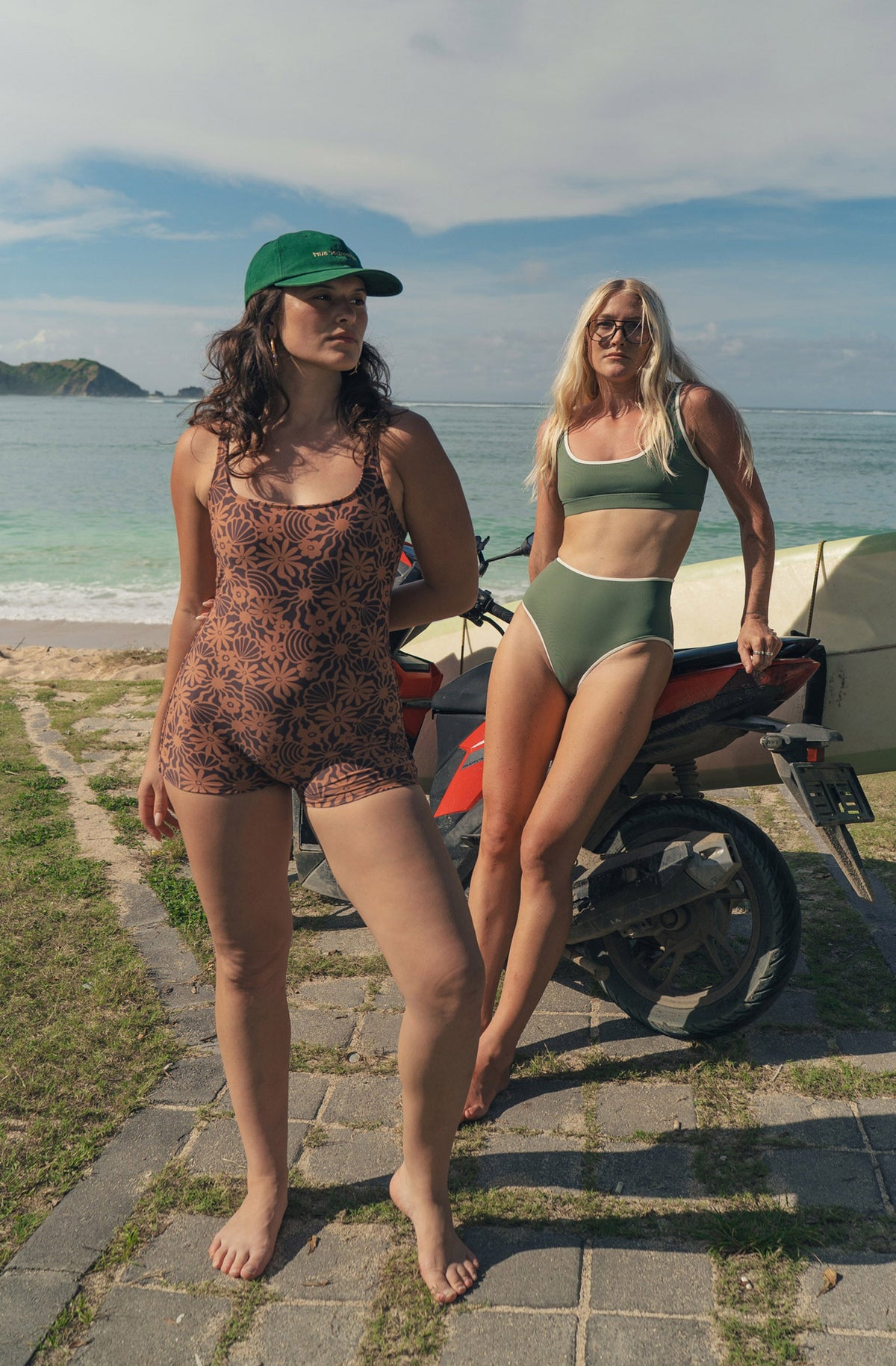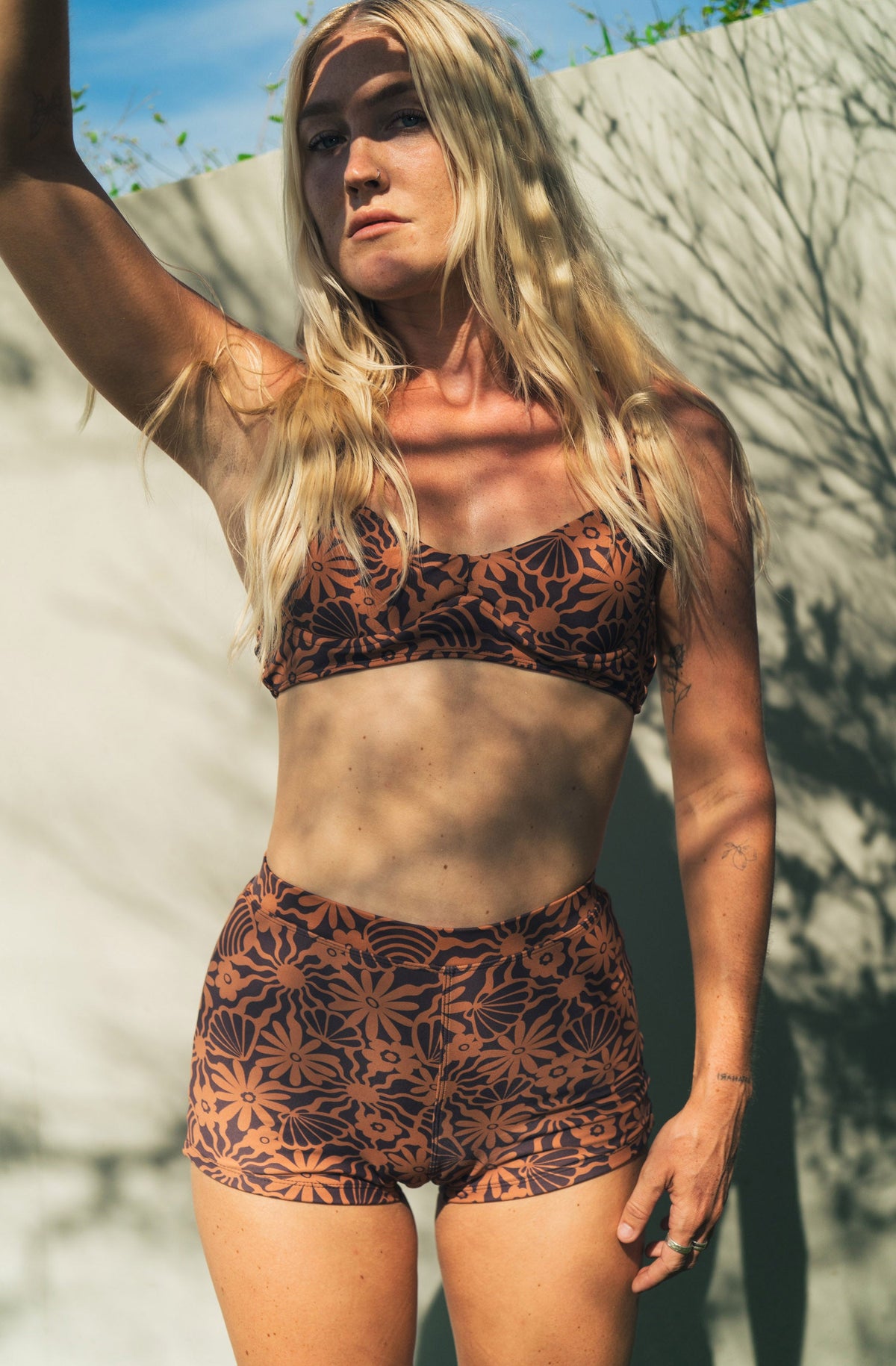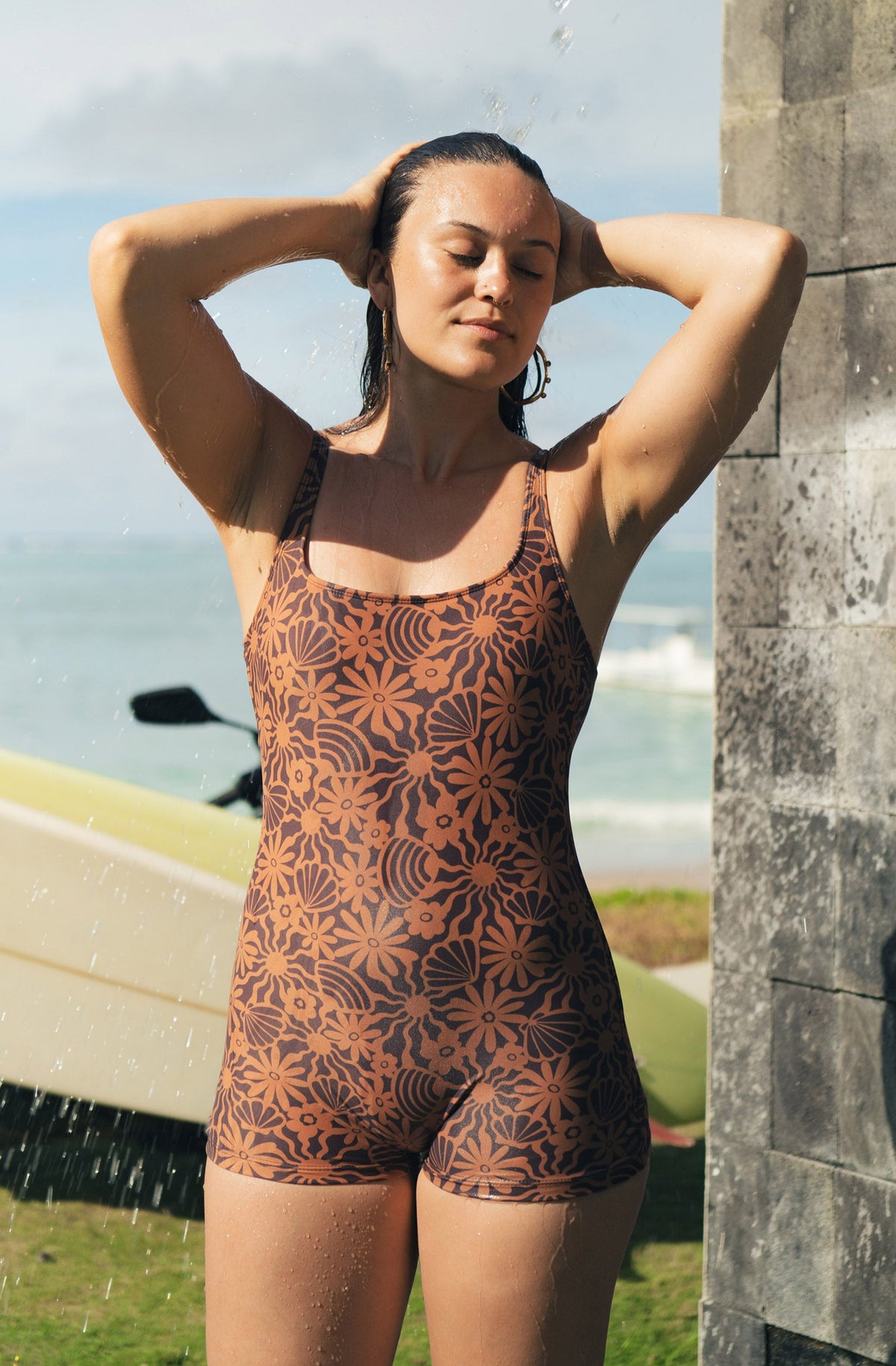
Journal

Exclusive Q&A with SEPTEMBER Founder, Erika Togashi
Read our exclusive Q&A with SEPTEMBER Founder, Erika Togashi, on the inspiration behind our latest collection 'Island Time'.

How to Choose the Right Fin Setup for the Right Surfing Conditions
The surf is on, you’re grabbing your favorite SEPTEMBER swimsuit, the mid-length waits for you in the trunk of the car but should I ride it as a single fin? Maybe a two plus one? Or what will it feel like as a quad? Does a mid-length twin fin sound crazy?Too many questions. Not enough answers.The answer might be a little clearer than we first thought. First, let’s check the conditions and put them into four categories: Small (up to head high) Big (overhead +) Fast peeling Slow peeling And our fin options: Single fin Twin fin Two plus one Thruster / Tri-fin Quad fin Most of us regardless of our level can sit on the beach and roughly determine where the conditions fit into these parameters, and the boundaries between them can be relatively flexible. A big or fast wave for you might not be big or fast for someone with more experience; so be honest with yourself and take it personally.So let’s relate fin selection to those categories.Small or soft waves are low on the potential energy from Gravity. If we’re not as high up or the wave slope isn’t so steep, then we won’t have much of a hill to drop down and gain speed. This means we need to make the board as efficient as possible, so it can still function in low energy waves. Allowing water to flow underneath the board with as little disruption and turbulence as possible is our ticket to this. So less fin = more laminar and clean water flow producing more lift to reduce drag, and more forward thrust. In big or steep waves where we have a good hill to drop down, then we’re not so concerned about finding speed, but instead getting down the line and past fast-breaking sections might be the challenge. Center fins and side fins have slightly different jobs; the center fin provides straight-line stability and stops the board from slipping and sliding side to side (like the keel of a boat), it also provides a rigid point to push on so we can direct and point the nose where we want to whilst maneuvering. Without it, you can imagine the tail sliding instead of directing.The side fins also stop the board from slipping but it’s not their main function. You might have noticed side fins aren’t symmetrical, they have a flat side and a curved side. The design is deliberately like an airplane wing made to generate lift. In our case, that lift is directed towards the wave face; keeping you locked and gripped into the wave face aiding in generating speed down the line.Single fins prevent slipping at the rear of the board during turns, allowing the rider to push off the tail and direct the nose in a predictable pivoting way. The center fin creates a bit of drag, and so we often need to compensate by having a larger board or a bigger steeper wave that will provide the speed. That's why longboards/ logs work well as single fins in small surf, but mid-length or smaller boards with single fins need more of a meaty wave. In brief, twin-fins are fast as they allow water to flow underneath the center of the board with low turbulence (no center fin disrupting the flow). The clean water flows backward producing more thrust forwards. And since the twin fin fins are often fairly large, they produce a lot of lift towards the wave face, so surfing down the line they can lock the board into the wave face and generate strong speed and grip. Without the center fin though they are a little looser and slippy when we lean on the back foot to maneuver, as the missing center won’t hold and direct the nose. What that means is twin fins are well suited to small or soft waves where generating speed is the priority but expect a little less predictability when maneuvering. The two-plus has the directional stability of a single fin, with a small portion of rail engagement from the side fins. Sometimes the overall size of the three fins is a bit smaller than a normal single fin, or normal side fins, and that’s so the overall drag created is less. Look for a bigger wave or faster wave for this setup to work best as we need to compensate for the drag. The truster or tri-fin is a ‘best of both worlds’ sort of thing where the center fin gives directional stability without slipping, and the side fins generate speed and grip from the wave face. So when the waves are bigger or faster they give you more security and predictability to work with. That's basically why they’re almost exclusively used in contests as the riders are often on good waves trying to push the board to its maximum. If the conditions are going to push YOU to the maximum (i.e it’s big or fast) then use the thruster.Quad fins as you probably can now predict give a super-strong rail engagement into the wave face since it’s all sideways lift into the wave. So on big waves or super fast waves (even small & fast) like tubing waves where you need to get down the line quickly, the quad can be the ticket to making it down the line and past breaking sections.So, when you’re choosing between the Lola One Piece or the Rita and Lolita bikini top and bottoms why not also choose your fins. Throw all of them in the trunk and decide at the beach; just don’t forget the fin key.

Meet SEPTEMBER's Surf Brand Ambassador, Jordan!
We recently had the opportunity to sit down with our new Brand Ambassador, Jordan, for an inspiring chat about her incredible surfing journey, her life in Indonesia, and all her personal favorites. Jordan joined SEPTEMBER earlier in 2023. She now lives and works as a surf coach in Indonesia but hails originally from Canada. Q. Could you tell us a bit about what brought you to Indonesia? Definitely the waves and there is just something about South East Asia that resonates within me. Q. When did you first start surfing and what does surfing mean to you? I first tried surfing in a very thick wetsuit in the Pacific North West, Tofino, British Columbia, Canada. Surfing for me is an intimacy with nature and the natural world. It is my greatest passion in life. A way to connect and focus my energy in something I love. It's my life's ultimate adventure where I get to travel, explore, and geek out on everything ocean-related, from waves to coastlines, and all the cool stuff in between! Q. How has your passion for surfing influenced your lifestyle and career choices? Surfing has changed my life big time! It brought me to the ocean and sparked my travel curiosity. I've chased waves all around the world, met incredible people, and embraced countless diverse experiences. I'm a surf coach for over 16 years now and have dedicated my life to surfing, coaching and living by the ocean. Q. What about surf coaching brings you the most joy? I love that my office is the ocean. Sharing my love for surfing and coaching with others lights up my heart! It’s a beautiful thing and brings me so much joy to see clients progress and have so much fun riding waves. Q. What do you appreciate most about the island of Lombok? Lombok is a dream! It has the best waves, breathtaking beauty, and the locals are all about sharing smiles like it's their favorite thing to do! Q. Do you have a favorite morning routine? Listening to the birds, meditation, stretching, coffee = GO! Q. Tell us about your favorite food (Indonesian and non-Indonesian) Indonesian treats? Absolutely love Balinese Pumpkin Curry and West Sumatra Beef Rendang! And when I'm in Canada, hand picked fresh garden salads with herbs, edible flowers and plants and mushrooms picked in the forest! Q. What do you love the most in the world? That's easy! My family, nature, friends, surfing, dancing and music. Q. SEPTEMBER is a sustainable swimwear brand. How does sustainability align with your personal values? I love the natural world. So, knowing that SEPTEMBER is all about eco-friendly production and sustainability makes me super proud to be their ambassador. It's the way every business should be doing! Q. How did you connect with SEPTEMBER and what aspects of the brand philosophy attracted you to become a brand ambassador? I first used SEPTEMBER swimwear while working for Surf Simply and absolutely love every piece of their collection! Their swimwear is fantastic in terms of fabric quality and functionality in the surf, and I also feel very beautiful in anything by SEPTEMBER. I love that SEPTEMBER uses a female owned and run manufacturer in Bali. Q. Do you have a favorite piece of the SEPTEMBER collection? I have many favorites! My current favorite piece of the collection is my Poppy Burnt Sienna Bikini! Q. Lastly, what's your dream travel or surf destination that you have not yet been to? I would love to travel to Senegal for surf! Additionally, I can't wait to return to the Himalayas for another big trekking adventure.

How to Noseride!
Noseriding, you’ve seen it on YouTube, in photos, and probably at your local spot. It’s a playful move in a longboarder’s repertoire. While the noseride seems as simple as shimmying to the front of the board, most fearless riders who give it a go uninstructed—and some instructed— will find themselves nosediving before they’re noseriding.

Which Surfboard Shape is Right for You
Swimsuits and surfboards have a lot in common, where even the prettiest surfboard, one-piece, or surf bikini should be designed with function first. Your surfboard should be versatile and perform in a range of conditions, much like our multi-use 'swim to gym' design philosophy. So, with that in mind let's talk about the different designs of longboards, and how you can choose the right board for you, with a certain emphasis on the center of style; noseriding. Erika and Anna with their surf quiver for the Mentawais To set the scene, let’s understand the physics going on under our feet. For a nose ride to function, we need two things; a wide nose providing lift up front, along with the surfboard rail engaged in the wave face for grip and hold, and finally whitewater on the tail countering your weight upfront. We don’t really know how much of each is required, but some of each or a lot of one will often suffice.The longer the board, likely the more encouraging it will be. So anything 9ft plus will give you the rail length required. Smaller than 9ft boards would work too, but longer just makes it easier. There are three common outlines in longboarding and they’re each described by where the widest point of the board is located; wide point forward, wide point center, and wide point back. WIDE POINT FORWARDA wide point forward board is going to be your most nose ride friendly; especially if you’re learning. Having a big wide nose on the board is going to provide a tonne of hydrodynamic lift helping to counter your weight upfront; allowing you to make more errors in your nose ride timing, positioning or being heavy-footed without the board giving up on you right away. A wide nose will also support you more at slower speeds, like on softer waves. So if you surf mushy waves then this board will also help. Level: Beginner nose rider-friendlyExample: Wingnut Nose rider WIDE POINT CENTER A wide point center or parallel railed longboard as it's sometimes referred gives strong rail engagement, as the majority of the board's length is parallel to the wave face we’re trying to engage into. This particularly helps on steeper or faster waves where we might need some speed and grip whilst nose riding. Level: Beginner - Intermediate nose riderExample: Bing Levitator WIDE POINT BACK A wide point back longboard is the culturally purest outline. A narrower nose won’t provide as much lift, but it will allow the board to fit in a much steeper and tighter wave. The wide point through the tail creates an almost teardrop shape providing a bulbous wider tail that is often rounded. With less weight up front and a rounded rear outline lets the rider pivot the board with a faster and smoother response, helping a more critical setup for nose riding. Level: Intermediate to Expert nose riderExample: Thomas Surfboards Harrison Thanks for reading, the rest is up to you! Feel free to message us with any questions at info@septembertheline.com

Your Technical Surf Questions Answered
Welcome to the world of surfing! Whether you're an experienced surfer or just starting out, there's always something new to learn. Here at our surf blog, we're dedicated to helping you find the answers to some of your technical surf questions. From equipment to technique, we've got you covered. So grab your board, get back out into the ocean, and let's dive into the exciting world of surfing together! And for those of you who dwell below the equator, it's swell season so let's throw on one of our super secure surf bikinis or one pieces and start answering a few of your burning surf questions! Q1: How do I do a drop knee turn and how do I know if I’ve done one? Excellent question, first of all, a drop knee turn is almost misleading as it has more to do with our foot placement than our knees. Instead of keeping the back foot in its default position where the toes and heel are placed between the two rails and over the stringer line. We instead pick the foot up and move it over to the side of the board we intend on turning, and do a ‘will you marry me/ proposal’ lunge. The back knee doesn’t quite touch the deck of the board, but is ‘dropped’ toward the deck as a product of the lunge…hence the name ‘drop knee turn’.By pushing into the back toes over towards the rail, you will redirect the board in that direction.Practice the move in the whitewater to get a high repetition rate, and keep your arms over the rails for the left to right stability, and stay in a soft and relaxed lowered stance to keep your center of gravity low. Q2: I stall out of the wave when trying to cutback, what is going wrong? A few things could be happening here. We can assume the wave is soft and low on power since that’s the reason we’re choosing to do a cutback. Our aim is to make it back to the apex of the wave, to rejoin the wave at its most powerful point, and with that in mind perhaps we want to be more passive with how much weight we’re using in the back foot during the carve. If we use too much on a low-power section of the wave then yes we will stall out.The same can be said for our timing, if we are waiting too long to initiate the turn, then we might not be able to retain enough speed or wave power to keep us on the wave. So any inkling that a cutback is necessary lets cutback nice and soon.If you have a bit more experience, then it’s worth noting that the relationship between how much weight we put into the back foot and how much weight we put into the toes or heel is all relative. If the carve is slow and wide then we only want a small amount of weight back and on the rail, it the carve is tight and fast then we need equal amounts on the tail and rail.Practice these ratios in the whitewater for high repetition, the Malibu one piece will be durable and comfortable enough for all that movement. And remember practice and data increase progression so pay attention to both the successes and mistakes. Q3: Where in the fin box should I put my longboard fin? The answer to this is simple and straightforward; if you want a looser sensation from the board creating perhaps a more dynamic or less predictable experience then slide the fin as far forward as it will go inside the fin box closer to the center of the board.In contrast, if you would like a board that steers from the rear with directional predictability from the back foot, then slide the fin into the back of the fin box closer to the tail of the board.The best analogy I have to explain why a forward fin is looser and a pushed back fin is more direct-able is to just imagine how the board would feel if the fin was dead center in the board; the board would spin in circles like a spinning top, i.e looser. And the fin right back at the tail stops the tail sliding and slipping, allowing you to lean into it and direct the nose exactly where you want it to point. Thank you to the SEPTEMBER community for the questions and keep them coming! We love to answer every and all questions!

How to Master the Cutback
We sat down with coaching extraordinaire Jessie Carnes, aka Surf Simply Head Coach aka SEPTEMBER Ambassador to hear her thoughts and tips on developing perhaps the most useful and most used maneuver at the typical surf breaks we tend to frequent…the cutback. Jessie has been product testing our swimsuits since 2020 and is an accomplished high-performance surfer; winning the Women's East Coast Championship in 2008. Jessie helps to give us feedback on the mobility and performance of our swimsuits particularly when under pressure through surf maneuvers. Living on the Pacific coast of Costa Rica, we also gather the long-term durability data of the luxury Italian #Econyl material, to ensure resistance from day-to-day and long-term salt and UV exposure. Hi Jessie, thanks for letting our readers pick your brain today. So if you don’t mind, let's set the scene and give us your take on what a cutback is, and why we might use them so often… JESSIE: So we use the cutback in both longboarding and shortboarding and the whole purpose of doing a cutback is so you can stay on the wave longer by ‘cutting back’ or redirecting the board back into the pocket and power of the wave. This leads you into surfing the rest of the wave a lot longer with more speed and more opportunity for later maneuvers.Ok, so now we know why and when let's talk preparation and the setup of the cutback… JESSIE: To prepare for the cutback first you want to pick a wave that is going to allow you the opportunity to cutback. What I mean by this is don't pick a close-out or fast-breaking wave. Choose a wave that's going to have more of a softer, slower shoulder on the side of the peak.So we’ve got our wave, what's next? JESSIE: A tip I like to give is to start high and end high. So start the cutback at the top of the wave, and as you move through the turn, aim to finish at the top of the wave also. You're trying to achieve a 180-degree direction change, and the higher you stay on the wave the more speed you will maintain through the turn. Is there anything you would have wanted to know when you were developing this maneuver? Any secret tips you wish you knew? JESSIE: I’d say the biggest common error I see when I'm surf coaching is that surfers don't hold the turn all the way back to the whitewater. A big tip when you're thinking about cutting back is to make sure you're cutting all the way back towards the power source at the whitewater, and not turning before then on the open face. This will help to maintain more speed. You're going to get stuck in the whitewater a couple of times and it might feel a little frustrating but it's going to help in the long run when you finally get projected back down the line with loads of speed. Thank you Jessie and before we sign off, do you have a favorite SEPTEMBER swimsuit? My favorite SEPTEMBER swimsuit for shortboarding has to be the Grace top and Elise bottoms. They have an elastic band under the bust and the waist and they never come down or move around, especially in big surf. Plus I like that they’re simple black and not flashy and just let me surf without thinking about them. Jessie is surfing in the Grace top and Elise bottom in the above serious of her performing a cutback. SEPTEMBER: Designed by women, for women.

Sustainable Swimwear: What Makes a Bathing Suit Good for Surfing?
Between paddling out, duck diving, wiping out (hey, it happens), or even just riding down the line, when it comes to surfing, the functionality of your swimwear is everything. But that doesn’t mean you have to sacrifice on style. We’ll admit, there are definitely some suits meant strictly for beach lounging. Leave those on the beach because there’s nothing worse than popping up only to find that you’re popping out. Having the right gear can make a difference in how much you enjoy your next session. To help you focus more on catching waves and less on what your suit may no longer be covering... What to Look for When Buying Surf + Swimwear Shop Our Line of Sustainable Surf & Swimwear → Material + Fit. The last thing any lady-slider wants to do is continue pulling up her bottoms or doing a bikini top check before popping back out of the water. Your bathing suit should be snug, like any compression gear, but not too tight. Check the brand’s sizing guide before ordering online to ensure you’re getting the proper fit. At SEPTEMBER, we made sure to keep you locked and loaded by making our suits from recycled nylon and woven with 22% Xtra Life Lyrca®—the perfect combo for function, style, and fit. Durability. Finding the right surfwear is an investment both in time and money, so why not make it last? Look for swimwear that uses strong lining material. We line our swimsuits and bikinis with the same amazing Italian recycled nylon as the outer fabric to give you enhanced shape retention and durability. Durability = sustainability. Another thing to look for is how resistant your suit is to suntan location and if it has UV protection. Our swimwear checks both those boxes. Design. To ensure maximum confidence and comfort, consider how much you want to show. If you’re opting for a two piece, look for bra-style straps or criss-cross straps, and if you want a classic triangle design, make sure the triangles don’t move. Whether you’re buying a one piece or bikini top, opt for a wide, thick strap, especially if you have a larger bust. The bottom line to keeping your suit on during those bottom turns: wear swimwear that was created for surfing. A design made for surfing by surfers is a great way to ensure that you’ll stay in place in the ocean. We understand where design and function meet. Shop Our Line of Sustainable Surf & Swimwear →

Ethical Swimwear 2023 | Sustainable Fabric ECONYL® Regenerated Nylon
At SEPTEMBER, we are passionate about giving back to the mama who sends us the waves: mother earth. Sustainability does not have to be a luxury. It needs to be an affordable option for everyone. From the materials, trims, and packaging—including our plastic-free hygiene liners, our classic shapes are made even better because of our passion for sustainability in fashion and beyond. The Perfect Fit | Italian Recycled Fabric When we use recycled fabric, we’re not only focusing on the perfect fit for you, but the perfect fit for the future of our planet. Our signature luxury Italian recycled fabric is made from 78% ECONYL® regenerated nylon and 22% elastane made from pre and post industrial waste such as ghost fishing nets and carpet fluff. Instead of being disposed of in the landfill, they are recovered and transformed into the regenerated nylon that makes your SEPTEMBER the Line swimsuit. Our innovative construction makes it twice as resistant to chlorine and suntan creams and oils than conventional recycled fabric. Plus, it’s also a UV protection of 50. Shop our Sustainable Line of Swimwear → Durability = Sustainability Our classic shapes and construction are inspired and designed by surfers. Why is this important? As a surfer, you have an inherent connection with the salt water that provides the peace and quiet that gives you piece of mind between sets; we call this water healing. Durability is essential to swimwear that works. That’s why our recycled nylon is woven with 22% Xtra Life Lycra®, a higher durability than mainstream swimwear fabric. Shop our Sustainable Line of Swimwear → Many brands use a thinner and cheaper lining material on their swimsuits. We don’t do that. We line all our swimsuits and bikinis with the same amazing Italian recycled nylon as the outer fabric. This gives the suit an enhanced shape retention that sculpts the silhouette, smooths and supports you in all the right areas, and leaves you feeling amazing and confident in and out of the water. If you would like to read more about our sustainable practices, please click here.